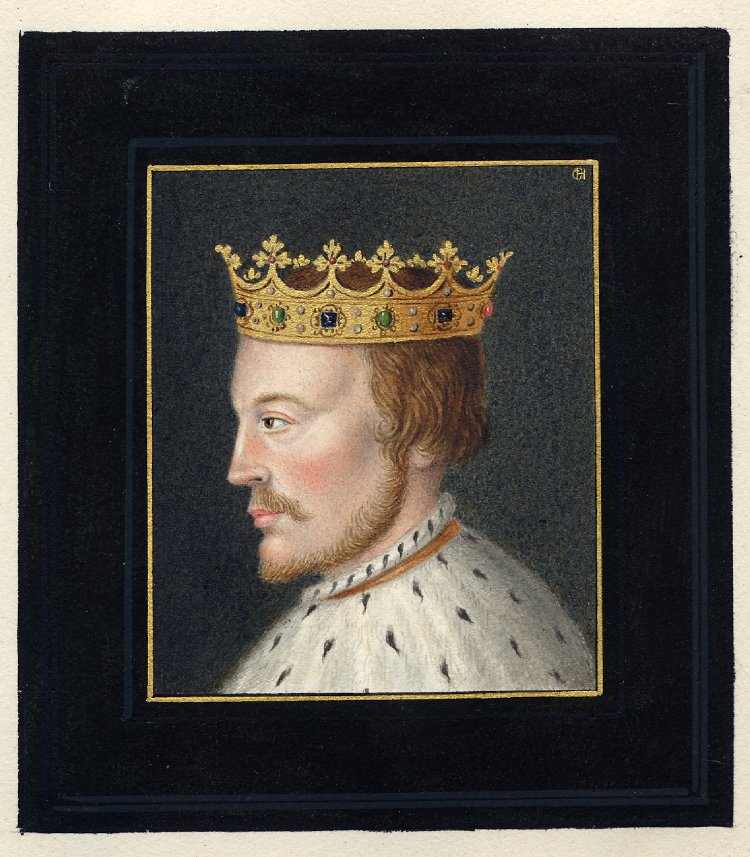
Duke of Ireland
Robert de
Vere, Duke of Ireland, Marquess of Dublin, and 9th Earl of
Oxford
KG
(16 January 1362 � 22 November 1392) was a
favourite and court companion of
King Richard II of
England..jpg)
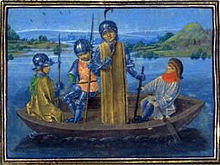 Robert de Vere was the only son of
Thomas de Vere, 8th Earl of Oxford and
Maud de Ufford.
He succeeded his father as 9th Earl in 1371, and was created
Marquess of Dublin in 1385. The next year he was created
Duke of Ireland. He was thus the first
marquess, and only the second non-princely duke (after
Henry of Grosmont, 1st Duke of Lancaster in 1337), in
England. King Richard's close friendship to de Vere was
disagreeable to the political establishment. This
displeasure was exacerbated by the earl's elevation to the
new title of Duke of Ireland in 1386.[2]
His relationship with King Richard was very close and
rumored by
Thomas Walsingham to be
homosexual. Robert de Vere was the only son of
Thomas de Vere, 8th Earl of Oxford and
Maud de Ufford.
He succeeded his father as 9th Earl in 1371, and was created
Marquess of Dublin in 1385. The next year he was created
Duke of Ireland. He was thus the first
marquess, and only the second non-princely duke (after
Henry of Grosmont, 1st Duke of Lancaster in 1337), in
England. King Richard's close friendship to de Vere was
disagreeable to the political establishment. This
displeasure was exacerbated by the earl's elevation to the
new title of Duke of Ireland in 1386.[2]
His relationship with King Richard was very close and
rumored by
Thomas Walsingham to be
homosexual.
Robert, Duke of Ireland, was
married to
Philippa de Coucy, the King's first cousin (her mother
had been the sister of the King's father,
Edward, the Black Prince), and also had an affair with
Agnes de Launcekrona, a Czech lady-in-waiting of
Richard's Queen,
Anne of Bohemia. In 1387, the couple were separated and
eventually divorced; Ireland took Launcekrona as his second
wife.
Washington Post
Dec 19, 1904
The name of de Vere occupies
so much of the attention of the American public
in connection with the amazing frauds of Mrs. Chadwick that
it may be as well to mention that there is no relation
whatsoever between her and old Sir Stephen de Vere, who has
just died in Ireland at Foynes Island, his place in County
Limerick, at the age of nearly ninety-four. Sir Stephen, an
elder brother of the Irish poet Aubrey de Vere, was for near
half a century one of the most prominent figures in Irish
life and politics, and it is the experience which he
acquired on a voyage to this country in connection with the
Irish famine of 1847 that caused him to start the agitation
which resulted in effective legislation against those
sinister engines of destruction, the so-called
"coffin-ships." Sir Stephen and his brother, the late Aubrey
de Vere were such courtly old fellows and personified to so
great a degree everything that was patrician, thatit is
somewhat a shock to learn that the so aristocratic name of
de Vere came to them by adoption rather than by direct
inheritance.
The family was founded by one
of Cromwell's soldiers in Ireland of the name of Hunt, who
married Jane de Vere, granddaughter of the Earl of Oxford,
and a member of the noble English House of de Vere, long
since extinct (by unclaimed), of which Lord Oxford was the
chief. It was one of the descendants of this Cromwellian
soldier and of Jane de Vere, who, on marrying the sister of
the first Lord Limerick, dropped the name of Hunt and re
assumed that of his de Vere ancestress, being subsequently
created a baronet, and it is his grandson, the fourth
baronet, who has just died, without issue, the baronetcy
becoming extinct, the estates passing, however, to his
grandnephew, Aubrey O'Brien, who will probably now in turn
reassume the name of de Vere.
MARQUISE DE FONTENOY.
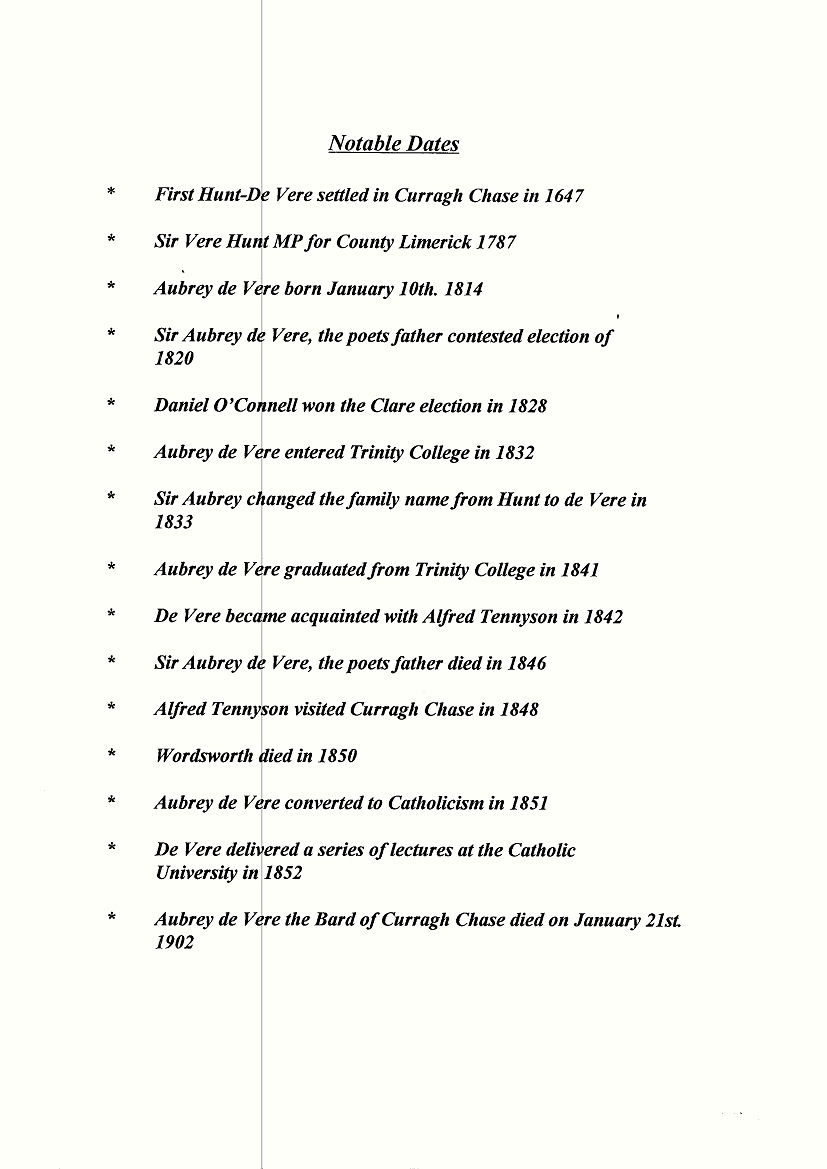
This family were descended from Vere Hunt, a
Cromwellian soldier who was granted land in county Limerick
and at Glangoole, county Tipperary in the mid 17th century.
John Hunt of Glangoul purchased 177 acres in the barony of
Kenry, county Limerick in 1703. In 1784 a descendant also
named Vere Hunt was created a baronet. The 1st Baronet
married Elinor Pery, sister of the 1st Earl of Limerick.
Their son Sir Aubrey re-assumed in 1832 the surname of De
Vere only.
He wrote poems, developed the estate and married Mary Rice
of Mount Trenchard, county Limerick. They had five sons,
none of whom left male heirs so Currah Chase passed to the
descendants of their daughter Elinor who married Robert
O'Brien. Robert Stephen Vere O'Brien the O'Brien's grandson
succeeded to Currah Chase in 1898 and reassumed the name
De Vere in 1899
In the 1870s the
De Vere estate was comprised of over 4,000 acres in
county Limerick. In the mid 19th century the De Vere estate
was mainly in the parishes of Kilcornan and Adare, barony of
Kenry and Kilmeedy, barony of Connello Upper, county
Limerick and in the parishes of Kilcooly and Fennor, barony
of Slievardagh, county Tipperary.
The agent in the early 1840s was Stephen Edward De Vere. The
Hollypark demesne was advertised for sale in December 1854,
Catherine Taylor, widow, was the petitioner. The county
Tipperary property, comprised of over 6,000 acres and
including coal mines at Glangoole, was advertised for sale
in June 1855. This sale rental is annotated with the names
of some of the purchasers.
Hunt (Limerick & Tipperary) - Burke's ''Landed Gentry of
Ireland'' (1904) states that Henry Hunt obtained Friarstown,
county Limerick, from Henry Ingoldsby of Cartown [Carton,
county Kildare] in April 1730. His third son, another Henry
Hunt, lived at Clorane, Kildimo, county Limerick. From his
eldest son, Vere, descend the Hunts of Friarstown. The
Ordnance Survey Name Books record Vere Hunt holding
Friarstown North on a lease renewable for ever from the
Reverend Richard Maunsell of Drehidtrasna, Adare. In the
1870s John T.U. Hunt of Friarstown owned 730 acres in county
Limerick. Junior branches of the Hunt family of Friarstown,
county Limerick, descend from the Reverend John Hunt of High
Park, county Tipperary and Thomas Hunt who married Dorothea
Bloomfield of Redwood, county Tipperary in 1798. John and
Thomas were younger sons of Vere Hunt of Friarstown. De Vere
Hunt held at least 8 townlands in the parish of Toem at the
time of Griffith's Valuation, while George and Robert Hunt
also had estates in this parish. In November 1852 the estate
of the trustees of the settlement of Vere Dawson White at
Cappagh was advertised for sale in 7 lots. It included the
dwelling house and demesne of Cappagh, John Dwyer tenant. In
May 1868 the estate of Robert Langley Hunt at Prospect and
Kyle, barony of Middlethird, county Tipperary was advertised
for sale and in June 1883 his estate at Kyle was for sale
again but there were no bids. Kyle was held on a fee farm
grant of 1850 from Wray Palliser to Mathew Richard Millet.
In the 1870s Vere Hunt of High Park owned 755 acres in
county Tipperary. At the same time the representatives of
Robert L. Hunt of Cooleney owned 655 acres, the
representatives of George Hunt of Currahbridge owned 2,790
acres and F. Robert Hunt of Julian's Hall, Monkstown, owned
2,245 acres all in county Tipperary. The estate of Matthew
de Vere Hunt at Huntsgrove, Gortnagowna, 257 acres in the
barony of Upper Ormond, was advertised for sale in February
1871. He died in New Zealand. Parts of the estate of John
Hunt at Shanballyduff, county Tipperary, were sold in the
Landed Estates in November 1860. They were purchased by
James Armstrong, in trust and by a Mr. Mason.
Cromwell soldier:
John de Vere, Lieutenant R F A,
born March 19, 1877. 2nd daughter, Eliza Rebecca
died February 14, 1865.
3rd daughter, Ida Jane. |









17thEO%20Earl%20Cousin.jpg)


01.jpg)
.jpg)

 \
\




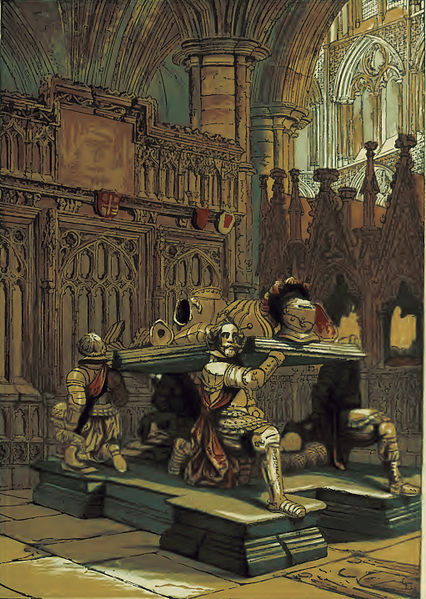
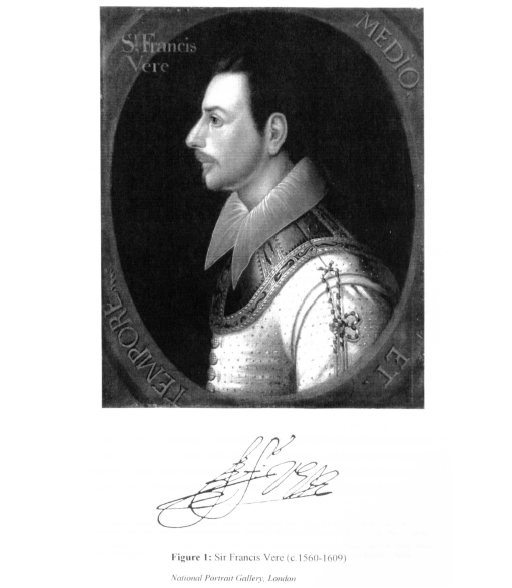
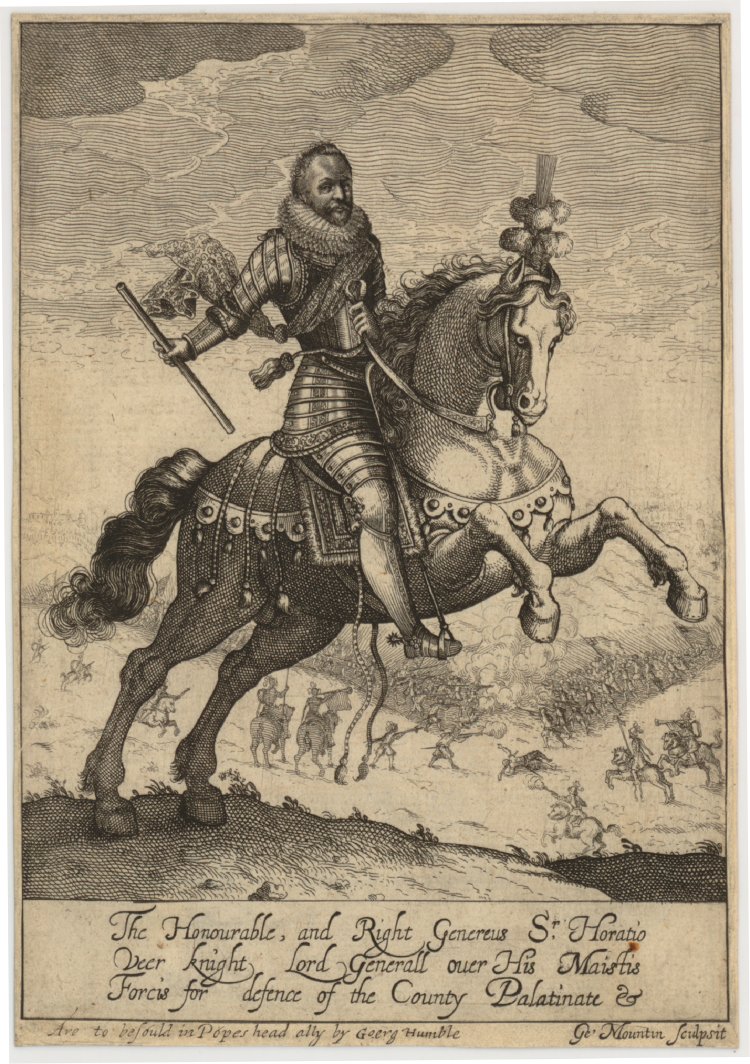
.jpg) Sir
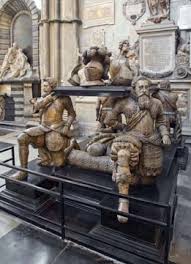
Francis Vere
Sir
Francis Vere


 during the reigns of the Emperors